
USM Haller Dimensions & Configuration Guide (2026)
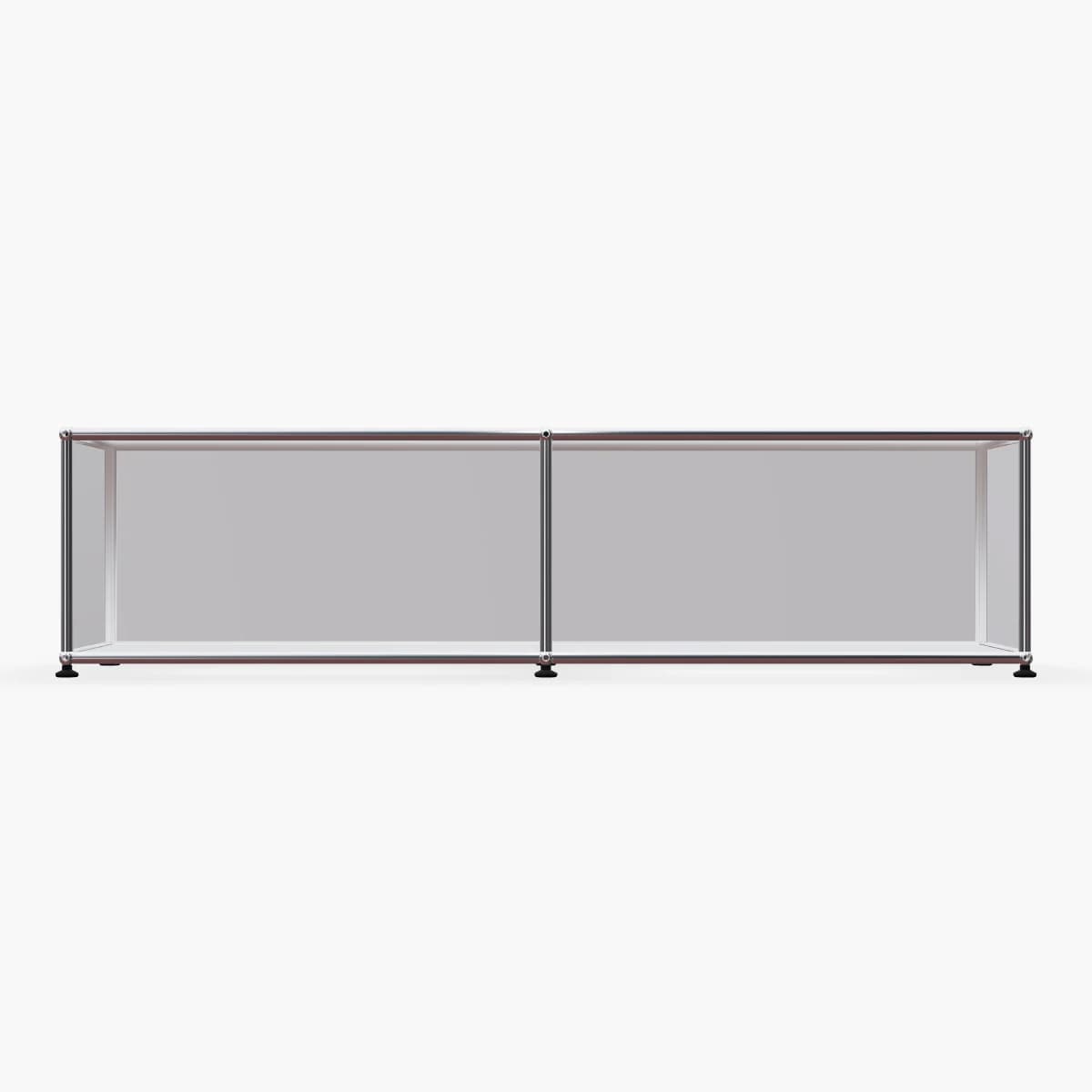
Quick answer: USM Haller-style systems are modular, so “what size do I need” is really three questions: how wide is your wall, how deep is the space, and how tall should the unit be. Measure those first. As a starting point, a 60 × 29 × 15 in unit (two modules wide, two tiers tall) is Arvhi’s best-selling footprint: it fits a 55–65 in TV wall, a standard dining wall, or behind a sofa, and it runs $1,499–$1,599 depending on the configuration (low media units start at $1,149). If you have a long wall, step up to a 90 in three-module unit; if you need floor-to-near-ceiling storage, a 60 × 71 × 15 in shelving unit covers most rooms. Every piece below lists real dimensions and prices so you can match a configuration to your room instead of guessing.
Article updated: September 2026.
Why sizing fails (and it is almost never the product’s fault)
Modular steel furniture does not come in “one size.” That is the point of the system — and the reason most sizing mistakes happen before the box even arrives:
- Buying by photos, not by wall. A 90 in unit looks balanced in a wide showroom photo and overwhelming against an 8 ft wall with a door on one side. Width is the dimension people get wrong most often.
- Ignoring depth. A 15 in deep unit is perfect against a wall; the same depth as a room divider or a desk surface is not. Depth decides what fits on the shelf and how much floor space the piece eats.
- Forgetting the ceiling (and the anchors). Tall shelving looks great until it needs wall anchoring or brushes a light fixture. Height is a safety question, not just an aesthetic one.
- No plan for expansion. The whole value of a modular system is adding modules later. If the first unit does not leave room to grow sideways, you will buy a second, mismatched piece in two years.
The fix is a 10-minute measurement session before you shop. Here is exactly what to measure, then how Arvhi’s module sizes map to your numbers.
Measure first: the only three numbers that matter
Take a tape measure (not an app estimate) and write down:
- Available wall width. Measure the wall segment the unit will stand against, from obstruction to obstruction — not the whole wall. Subtract 2 in on each side for outlet clearance, baseboard overhang, and simple breathing room. This number is your real width budget. Example: a 70 in wall with a door frame on one side becomes a ~66 in budget, which fits a 60 in unit comfortably but not a 90 in one.
- Ceiling height minus the unit. For tall shelving, measure floor to ceiling, then subtract at least 4 in. Also check what is above the spot: light fixtures, vents, or crown molding can reduce usable height.
- Depth and walkway. Measure how far the unit can stick out without blocking a door swing, a walkway, or a frequently used outlet. In a dining room or hallway, keep at least 36 in of clear walkway in front of the piece. Depth also sets what you can store: see the depth section below.
One more check specific to low units: decide what will sit on top. If a TV is going on the unit, the unit height plus half the TV height should land near seated eye level (roughly 40–45 in to the TV center). At 29 in tall, a 60 in credenza puts a 65 in TV’s center at about 44 in — comfortable for most sofas. A much lower 17 in media unit is better when you want the TV lower or the room more open.
How the module system works (plain English)
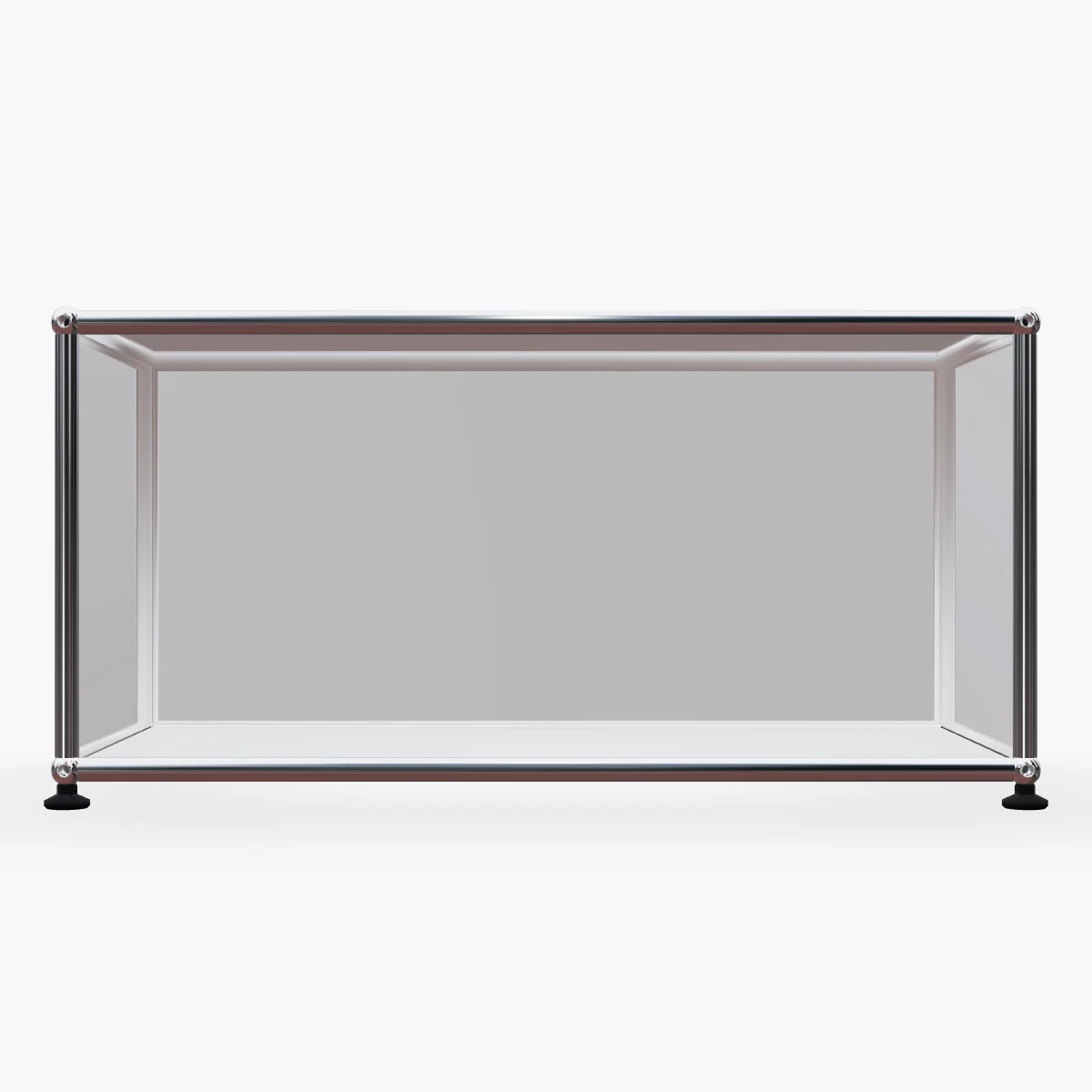
A Haller-style modular unit is built from three parts: chrome steel tubes, steel ball joints, and powder-coated steel panels. Tubes and panels repeat in fixed sizes, and every joint locks at the same spacing, so units grow by adding modules side by side (making the unit wider) or on top (making it taller).
The original USM Haller system uses a metric grid and is priced accordingly — the official US price for the USM H2 open shelving unit (71 × 60 × 15 in) is $5,858 at the time of writing. Arvhi builds the same design language in inch-based modules so you can plan in the units your tape measure gives you:
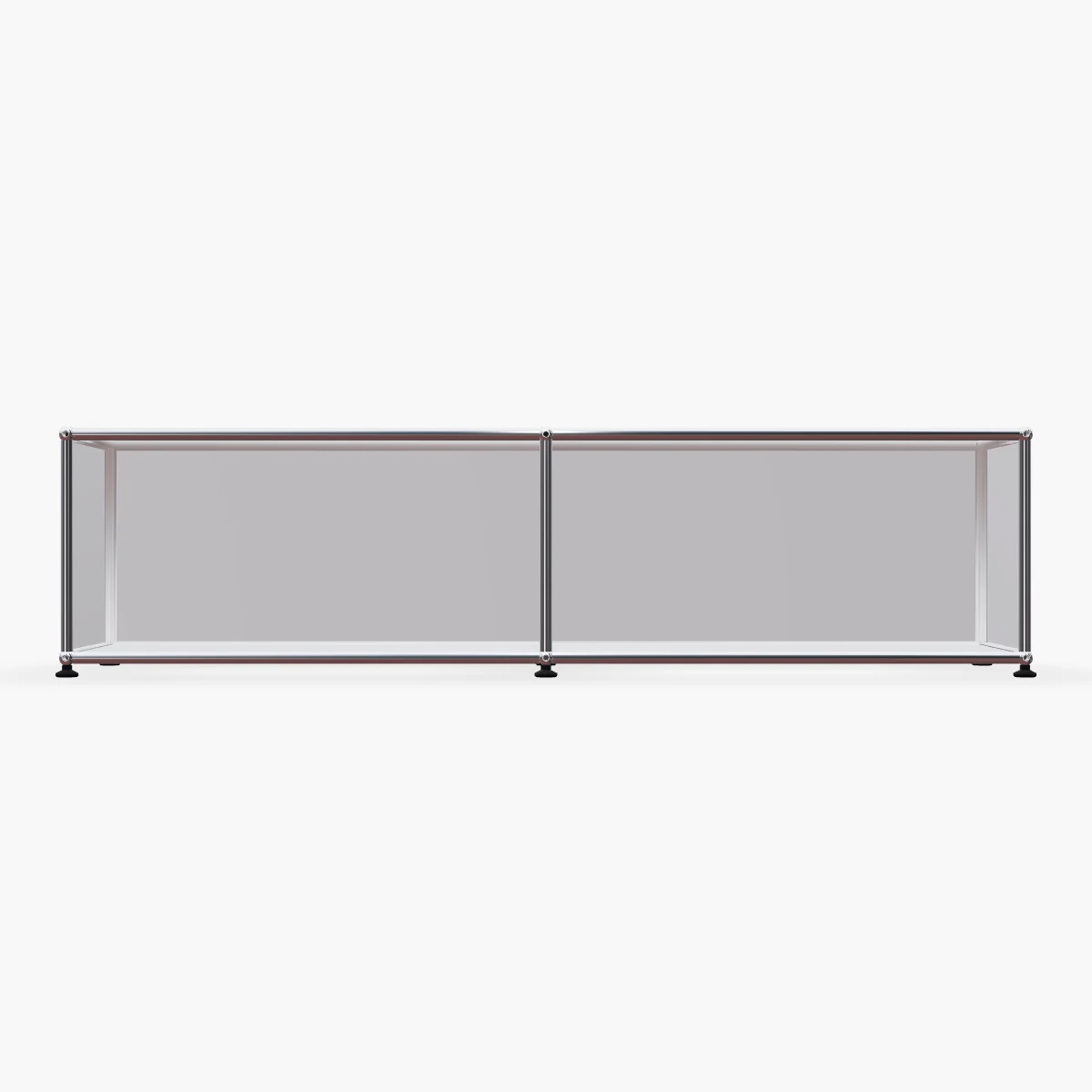
- Width: each module is 10, 14, 16, 20, or 30 in wide. Stock units combine these: a 60 in sideboard or credenza is two ~30 in modules; a 90 in unit is three; the largest stock credenza (H22) spans about 118 in across four modules.
- Height: modules stack in 4, 7, 10, 14, 16, or 20 in tiers. Low media units run 17–22 in tall, sideboards and credenzas ~29 in, three-tier storage ~43 in, and full shelving 60–71 in.
- Depth: 10 in for slim consoles and hallways, 14 in for display and sideboard duty, 20 in for deeper storage and desk configurations.
- Finishing choices are part of the build: panels can be left off any face (each removed panel cuts 10% off the module), fronts can be open, drop-down, flip-up, or drawer, and the base can sit on glides or castors. Fourteen colors are stocked, with custom RAL colors available.
Two stock examples that show the range: the E2 Sideboard is 60 × 29 × 15 in ($1,599 during the current sale) and the C18 Shelving is about 90 × 70 × 15 in ($3,499) — same system, different number of modules.
Configuration recipes by room
These are Arvhi’s own pieces, so the dimensions are exact. Prices are the September 2026 sale prices; the current price is always on the product page.
Want to start from a finished piece instead of a custom build? Browse the sideboard collection, the credenza collection, the media console collection, or the shelving & storage collection.
| Your setup | What to measure | Recommended configuration | Price (sale) |
|---|---|---|---|
| TV wall, 55–65 in TV | Wall width ≥ 64 in | O2 Media (60 × 22 × 15 in), or B218 Media (60 × 17 × 15 in) for a lower profile | $1,499 / $1,149 |
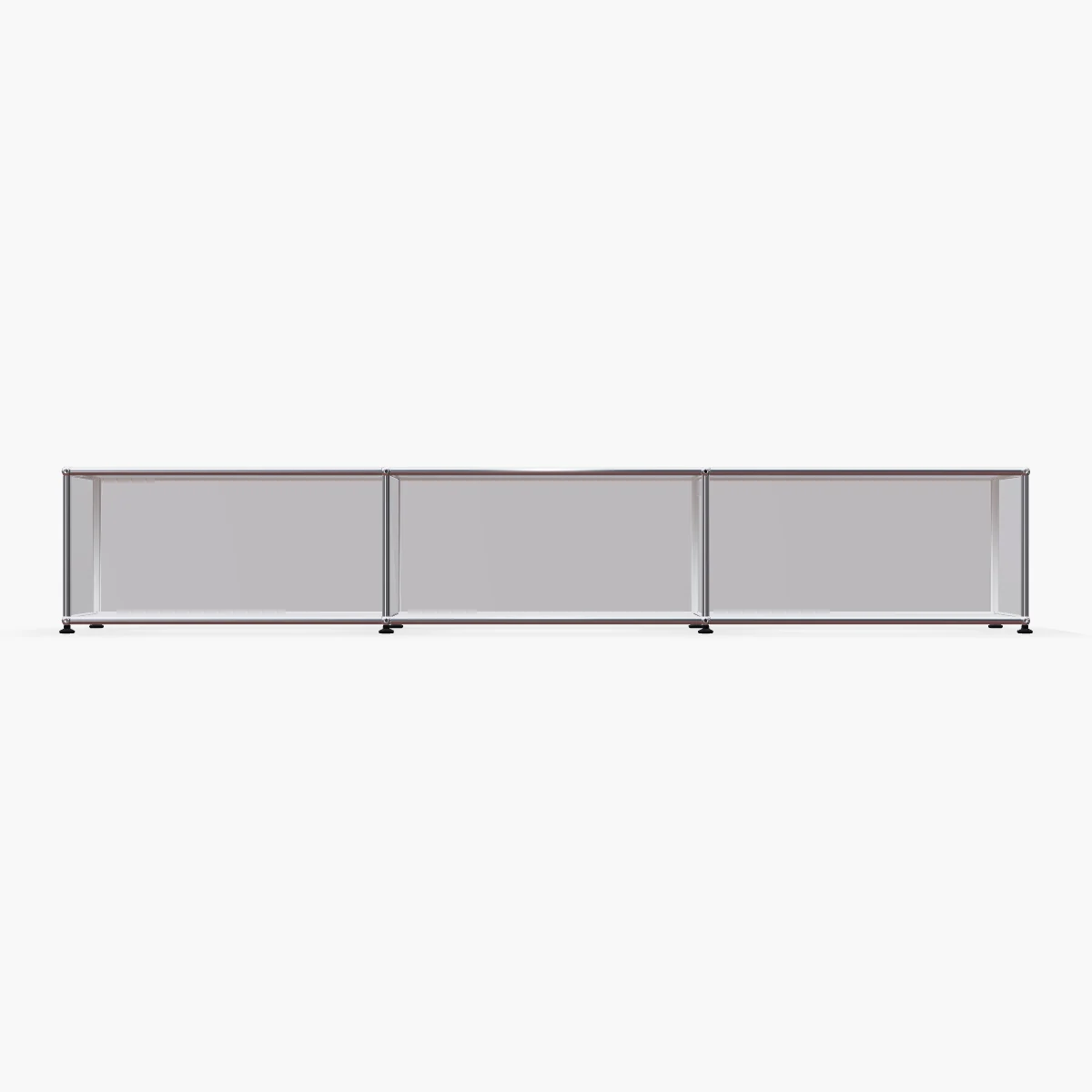
| TV wall, 70–85 in TV | Wall width ≥ 94 in | C13 Media (90 × 15 × 15 in, three modules) | $1,599 |
| Dining or entry sideboard, standard | Wall width ≥ 64 in, 36 in walkway | E2 Sideboard (60 × 29 × 15 in) | $1,599 |
| Sideboard for a long dining wall | Wall width ≥ 94 in | Sideboard 3×2 (90 × 29 × 15 in) or 114 Sideboard (89 × 38 × 14 in) | $1,899 / $2,199 |
| Living room credenza (media or behind sofa) | Wall width ≥ 64 in | F2 Credenza (60 × 29 × 15 in) or C2A Credenza (60 × 29 × 15 in, heavier build) | $1,499 |
| Taller closed storage, home office | Wall width ≥ 64 in, ceiling ≥ 55 in | M64 Credenza (60 × 43 × 15 in) | $1,799 |
| Single narrow shelving column | Niche or wall ≥ 36 in wide, ceiling ≥ 78 in | R1 Shelving (31 × 71 × 15 in) | $2,199 |
| Full shelving wall, two modules | Wall width ≥ 64 in, ceiling ≥ 78 in | H2 Shelving (60 × 71 × 15 in) | $2,999 |
| Full shelving wall, three modules | Wall width ≥ 94 in, ceiling ≥ 78 in | C18 Shelving (90 × 70 × 15 in) | $3,499 |
| Home office desk setup | Desk footprint ≥ 50 × 20 in | A1 Desk Unit (50 × 30 × 20 in), pair with H2 or C18 above | $1,499 |
| Narrow entryway or hallway | Wall width ≥ 34 in, shallow depth | M51 Console Table (40 × 32 × 11 in) or M56 Shelving (31 × 39 × 15 in) | $1,399 / $749 |
| Any wall, exact fit | All three measurements | Build it in the 3D configurator with any width, height, and depth combination | real-time price |
Reading the table: match your measured wall width to the column, then confirm depth and ceiling fit against the listed dimensions. If your number sits between two rows, size down and plan to expand — modular systems are built to grow.
Depth, load, and shelf spacing
Depth is the dimension buyers understand last and regret first:
- 10 in: slim consoles, entryways, display only. Shallow by design — fine for decor, not for storage boxes.
- 14–15 in: the default for sideboards, credenzas, and media units (all of Arvhi’s 60 in units are 15 in deep). Holds a TV, turntable, stacked bins, folded linens, and standard dishware. Oversized serving platters will not fit flat behind closed doors.
- 20 in: deeper storage and desk duty. The A1 Desk Unit is 20 in deep for a reason — office gear and monitor stands need the extra reach.
Load is not a guessing game on steel units: Arvhi’s E2, F2, and C2A units list a rating up to 50 kg (~110 lb) per shelf, the same class of rating the original system’s metal elements carry (up to 50 kg for standard-size metal shelves). If a listing is silent on load rating, treat that as an answer.
Shelf spacing depends on what you store. As a rough guide: paperbacks and display objects want 10–12 in of clearance per tier, record sleeves and small appliances want a bit more, and media components need front clearance for vents and cables. Because the grid locks at fixed increments, count the tier positions when you plan — you cannot fine-tune a steel frame by fractions of an inch.
Safety: when tall units need anchoring
Any shelving unit taller than about 40 in should be anchored to the wall in homes with children or pets, and full-height units (60–71 in) should be anchored regardless. Modular steel is heavy and stable on a flat floor, but a tall, loaded unit can tip if climbed or bumped hard. Leveling glides fix uneven floors; they do not replace an anchor strap. If a full-wall configuration is the goal, plan the anchor points before the unit arrives, not after it is loaded.
Expand later: the payoff of buying modular
The strongest argument for a Haller-style system is that the first purchase is not the last. Arvhi’s stock pieces are preconfigured modules, and matching units and the 3D configurator use the same grid, so you can add width beside an existing unit or stack another tier on top when the room changes. Buy the module that fits today’s wall; grow it as the wall frees up. This is exactly why the earlier advice — leave room to expand sideways — matters.
How to use the Arvhi 3D configurator
Arvhi’s configurator (free, no account needed) is the fastest way to turn your three measurements into an exact unit and a real-time price:
- Pick a color from the palette.
- Set width, height, and depth from the module options (10–30 in wide, 4–20 in per tier, 10–20 in deep).
- Click any face to add a module — the 3D view grows as you build.
- Choose the front style (open, drop-down, flip-up, or drawer) and whether each face is paneled or open. Removing a panel cuts 10% off that module.
- Pick the base: glides or castors.
- Read the live price, then save, screenshot, or share the design. A base module (30 × 14 × 14 in) prices at about $1,052 list, $526 during the current 50% off sale.
Open the Arvhi 3D configurator to build your exact size — or start from a stock piece and customize the color.
FAQ
What size USM Haller-style unit do I need for a 65-inch TV? A 60 in wide unit (two modules) fits a 55–65 in TV with balanced proportions: the O2 Media or B218 Media for a low media profile, or the F2/C2A Credenza at 29 in tall if you also want storage behind doors. For a 75 in+ TV, step up to the 90 in C13 Media.
How do USM Haller dimensions work? The system is modular: widths, heights, and depths repeat in fixed module sizes, and units grow by adding modules side by side or on top. Arvhi builds in inch modules (width 10–30 in, tier heights 4–20 in, depth 10–20 in); stock pieces are preconfigured combinations such as 60 × 29 × 15 in.
How much weight can each shelf hold? Arvhi’s E2, F2, and C2A units list a rating up to 50 kg (~110 lb) per shelf, comparable to the original system’s metal shelving class. If a model does not state a load spec, ask before loading it with heavy items.
Can I add modules to an Arvhi unit later? Yes. Stock pieces and the configurator share the same module grid, so you can add width beside an existing unit or stack another tier on top. This is the core advantage of buying modular in the first place.
What depth do I need? 10 in for slim display and hallways, 14–15 in for sideboards, credenzas, and media units, and 20 in for deeper storage or desk duty. When in doubt, choose depth by the largest item you must store behind a door or on a shelf, then check the doorway it has to travel through.
Do Arvhi units fit with original USM Haller parts? Arvhi describes its units as designed for compatibility with Haller-style systems, but they are inspired-by pieces, not USM products. If you plan to mix original USM parts with a dupe, verify fit with the seller before ordering — tolerances and connector specs vary between manufacturers.
Bottom line
Sizing a modular steel unit comes down to three tape-measure numbers: wall width, ceiling height, and depth with walkway clearance. Match those to a 60 in two-module unit for most TV walls, dining walls, and behind-sofa spots; a 90 in three-module unit for long walls; and a 60 × 71 in shelving unit for full-height storage — then let the configurator confirm the exact fit and price. Every Arvhi piece listed here shares the same verified build: chrome-plated steel frame, powder-coated panels, stainless ball joints, 50 kg per shelf, a 5-year warranty, and free 30-day returns.
Still comparing across the category? Start with our guide to the best USM Haller dupes for USA buyers, our sideboard and credenza dupe buying guide, or the modular shelving systems guide. For a unit built to your exact wall, open the 3D configurator.