
How Much Weight Can a Modular Steel Shelf Hold?

A modular steel shelf typically holds around 110 lb (50 kg) per shelf when the weight is spread evenly across the span. That is roughly 45 hardcover books, or a receiver and a turntable together with room to spare. The number that matters is not the one on the box, though. It is whether the rating is per shelf or per unit, and whether your load is spread out or concentrated in one spot. Those two details can cut a usable limit almost in half.
What a Load Rating Actually Means
Most shelving is sold with a single number and no explanation. Three details sit behind that number, and all three change what you can safely put on it.
Per shelf or per unit. A system advertised at 550 lb sounds far stronger than one rated 110 lb. If the first figure covers five shelves and the second is per shelf, they are identical. Manufacturers are not always clear about which they mean. If a spec sheet gives one large number without saying how many shelves it covers, assume it describes the whole unit until someone confirms otherwise.
Distributed or point load. Nearly every published rating assumes weight spread evenly from one end of the shelf to the other. Concentrate the same total in the middle and the shelf will flex noticeably more.
This is not a small difference. USM publishes both figures for its Haller system: a maximum distributed load of 50 kg for metal elements up to 750 by 500 mm, and a maximum point load of 30 kg, with a reinforcing profile required above either threshold. That is a 40 percent drop between the two numbers on the same shelf. A 110 lb rating does not mean you can set a 110 lb safe in the center of the span.
Span. A shelf twice as wide does not hold half as much. Deflection rises much faster than length does, which is why systems built on a fixed grid publish ratings for one module size rather than a general figure. Widen a bay and the rating for that bay drops.
Those three points are why this question has no single answer, and they are the three things most product pages leave out.
Where the Weight Actually Goes
Picture the load as something that has to travel from your books down to the floor. The route it takes decides how much a shelf can carry.
In a flat-pack bookcase, the shelf board itself is the structure. The load presses on the board, the board transfers it to the side panels through cam fittings, and the side panels carry it to the floor. Everything depends on how the board behaves under sustained pressure. Particleboard and MDF creep, meaning they deform slowly under a load that never changes. That is why a bookcase can look fine for two years and then show a visible bow in the middle shelves.
In a rail and bracket system, the load runs through a small clip engaged in a slotted upright. The steel is strong, but the contact area is tiny and the unit is rarely stable on its own, which is why these systems almost always require wall anchoring.
In a steel tube and ball joint system, the panel is not really the structure. The frame is. Load passes from the panel into the tubes, and from the tubes into the joints, which hold the frame square in every direction at once. The panel only has to span the distance between tubes.
That distinction has a practical consequence. In a frame based system, adding a door or swapping a panel color does not change what a shelf holds, because none of those parts were carrying the load to begin with.
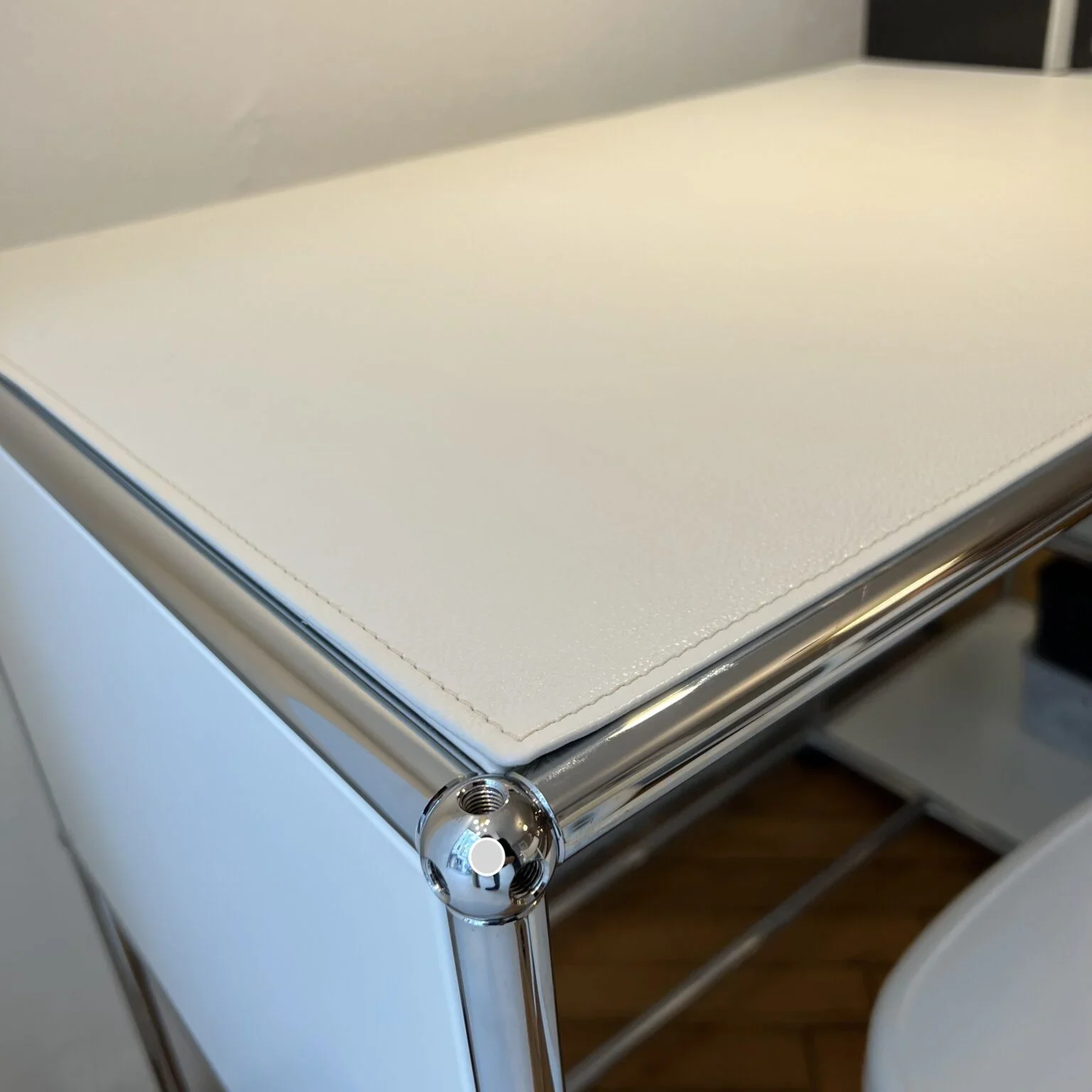
Arvhi units use stainless steel ball joints with a chrome plated steel frame, and each shelf is rated to 50 kg, about 110 lb. The rating comes from the frame geometry, which is also why it survives being taken apart and rebuilt in a different shape. How those connections work is covered in the modular shelving systems guide, and the difference between a joint that pivots and one that does not is set out in ModuBall vs FixJoint.
What 110 lb Looks Like in Real Objects
Ratings are abstract. Here is what actually reaches them, on a 30 inch shelf span.
| What you are storing | Approximate weight | Share of a 110 lb shelf |
|---|---|---|
| Paperbacks, packed tight | 30 to 40 lb (14 to 18 kg) | About a third |
| Hardcover books, packed tight | 50 to 65 lb (23 to 30 kg) | Half to two thirds |
| Vinyl LPs stored upright | 75 to 95 lb (34 to 43 kg) | Most of it |
| AV receiver and turntable together | 35 to 55 lb (16 to 25 kg) | A third to half |
| Dinnerware for eight | 30 to 45 lb (14 to 20 kg) | About a third |
| Board games, stacked | 20 to 35 lb (9 to 16 kg) | A quarter to a third |
| Three medium ceramic planters, watered | 30 to 60 lb (14 to 27 kg) | A quarter to half |
Two things stand out.
Vinyl is the heaviest thing most people put on a shelf. A 12 inch LP with its jacket weighs a little over half a pound, and records are stored standing upright, packed edge to edge. That combination puts a large load into a narrow strip rather than spreading it across the shelf, which is the least forgiving way to load anything. If you are building around a record collection, plan on one shelf sitting close to its limit, and look at the media console collection rather than a general purpose shelf.
Almost nothing else comes close. For books, dishes, electronics, and storage boxes, a 110 lb rating is not a limit you will reach by accident.
To check your own load instead of guessing, weigh ten items of the same type on a kitchen scale, multiply by how many fit in the span, and add 20 percent. The margin covers what you will add later, which is always more than you expect.
How Different Shelf Systems Compare
The honest starting point is that all three of these will hold a normal shelf of books. The differences show up over years, and when you change the layout.
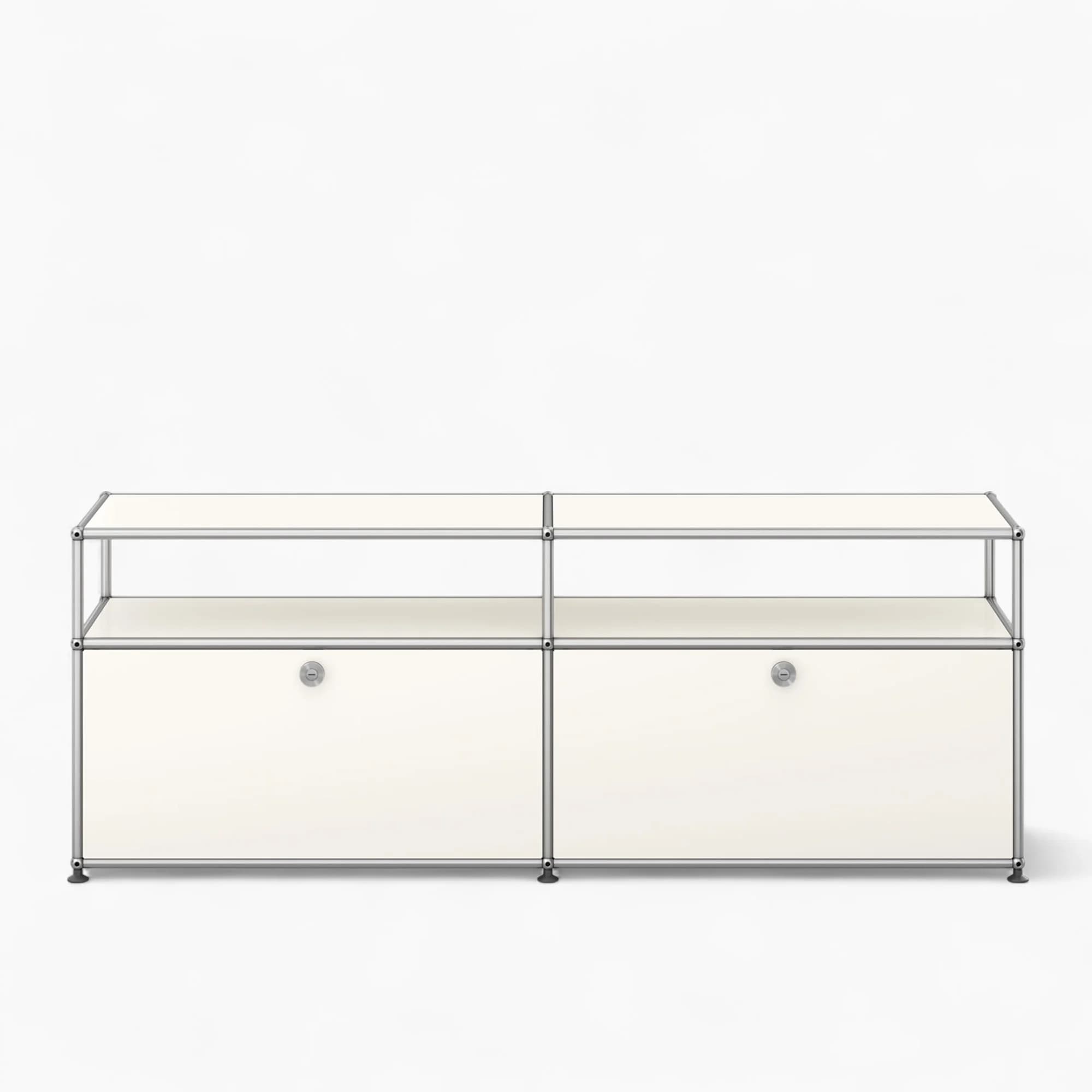
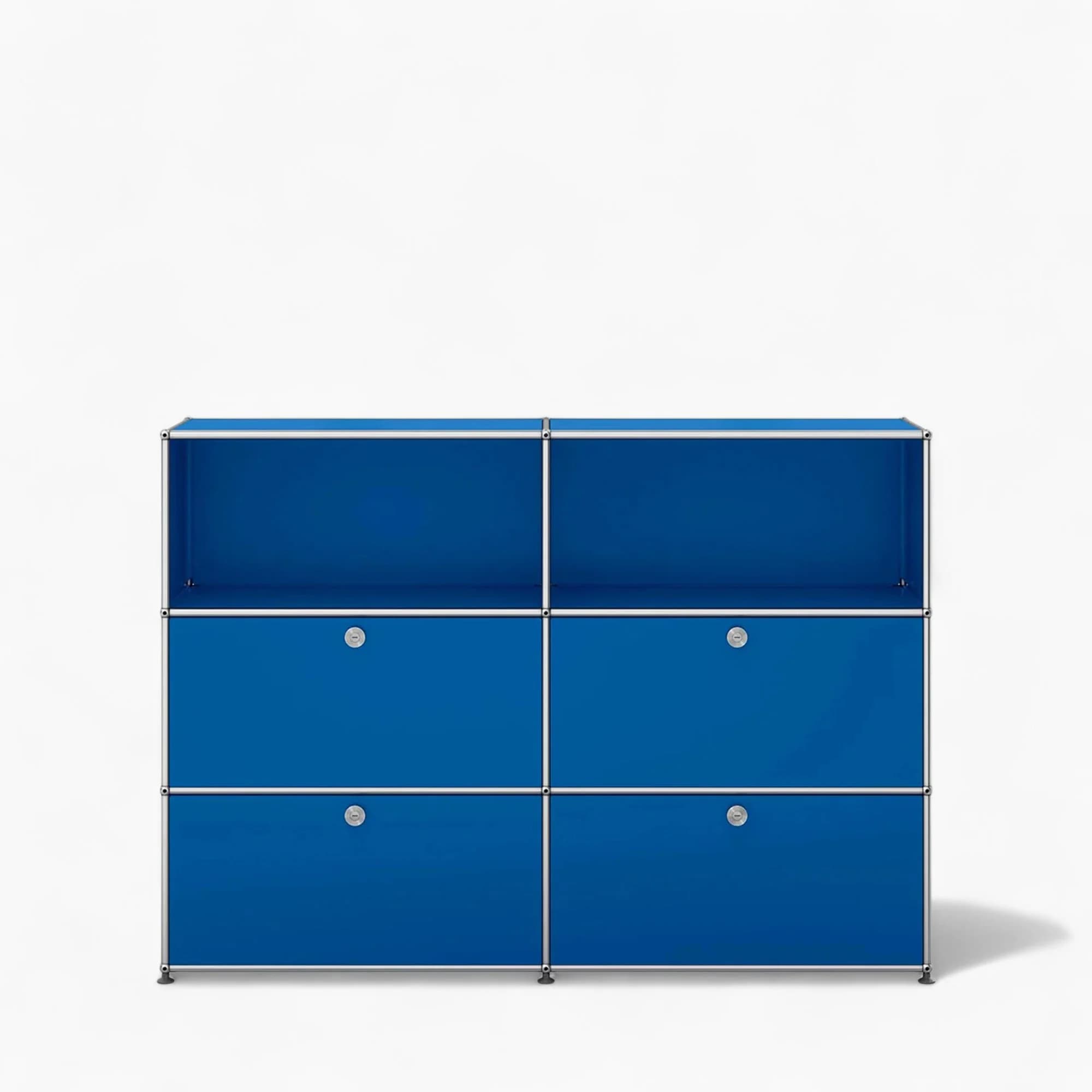
Best sellers
View all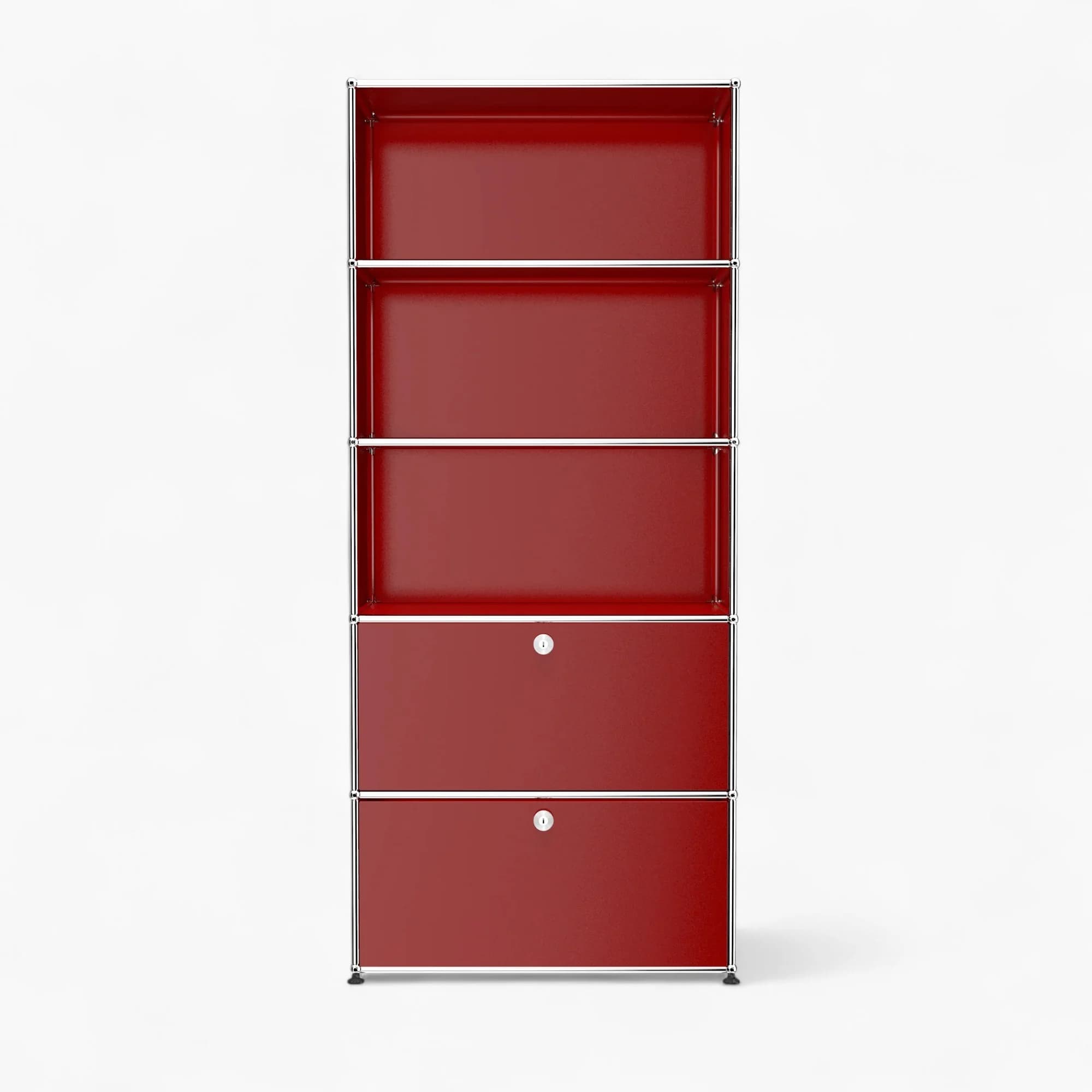



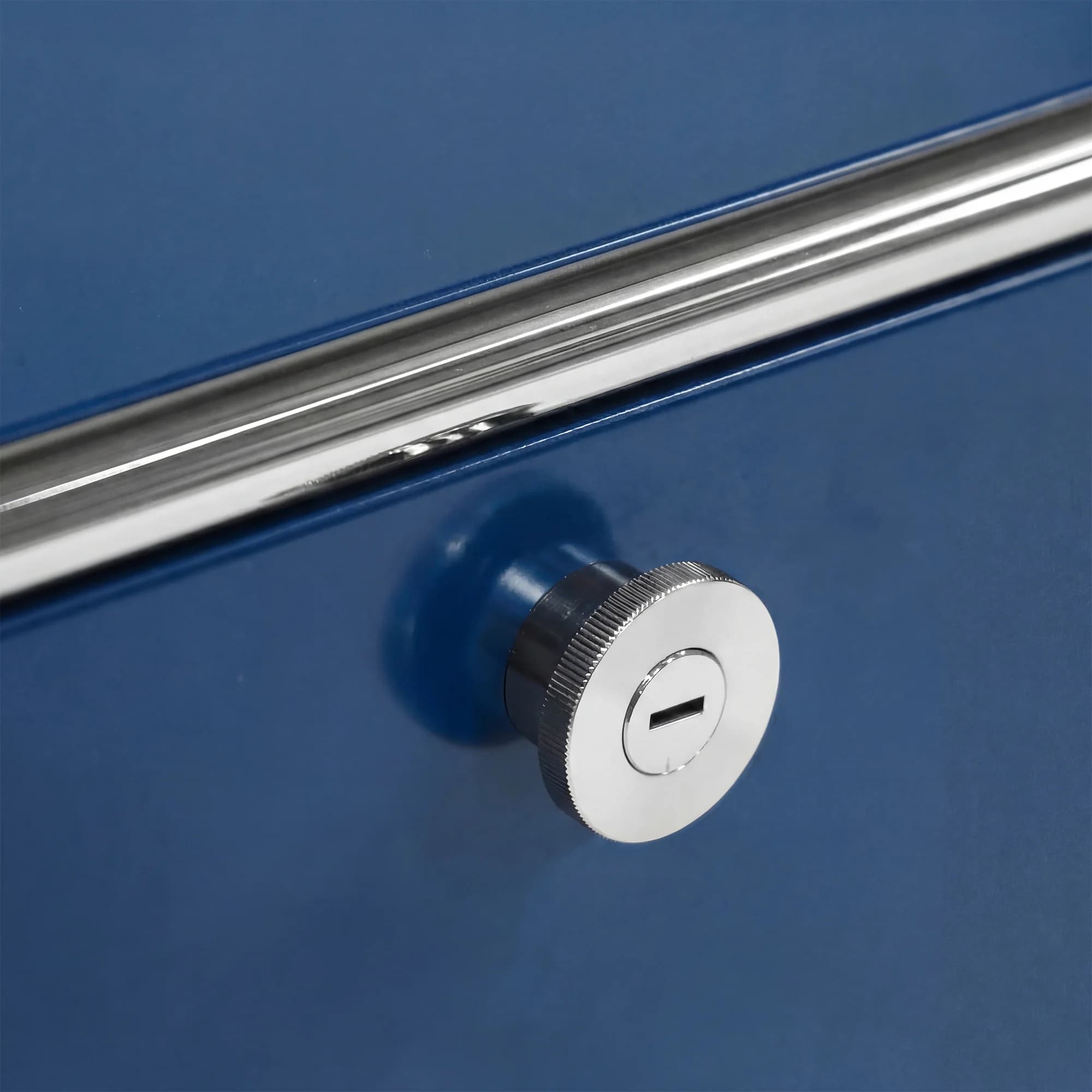
| Particleboard and cam lock | Steel rail and bracket | Steel tube and ball joint | |
|---|---|---|---|
| Holds a full shelf of books | Yes | Yes | Yes |
| What carries the load | The board itself | A clip in a slotted rail | The frame, at the joints |
| Sags under sustained load | Common after a few years | Rare | Rare |
| Needs wall anchoring | Often, for stability | Almost always | Depends on height and load |
| Survives repeated disassembly | Limited, the fittings wear | Yes | Yes |
| Rating changes if you reconfigure | Yes, span dependent | Yes, span dependent | No, within one module width |
| Cost per shelf | Lowest | Low | Highest |
Read the last row alongside the rest. A metal frame system costs more per shelf than anything else here, and if your storage needs are settled and the unit will never move, that premium buys you very little. The case for it is built on the middle rows, not the top one.
And there is a point where none of these is the right answer. If you are storing tools, paint, or archive boxes in a garage or basement and appearance does not matter, industrial boltless steel racking holds several times more per shelf and costs less than any of the three. It is not furniture and will never look like furniture, but for load per dollar nothing beats it.
Warning Signs You Are Overloading a Shelf
Steel gives more notice than particleboard does. These are the signs, roughly in the order they appear.
Visible bow in the panel. Sight along the front edge of the shelf at eye level. A straight line means you are fine. A dip in the middle means you are near the practical limit for that span, even if you are under the rated number.
The unit racks when pushed. Put a hand on a top corner and push sideways. Some movement is normal. If the whole frame leans into a parallelogram and stays there, the load is working against the frame geometry rather than sitting on the shelves.
Doors that no longer sit flush. On a loaded unit, doors are the earliest warning. If a door that used to close cleanly now catches on one corner, the frame has moved.
Marks around a joint or fitting. Bright metal, cracking, or witness marks around a connection mean load is concentrated somewhere it was not meant to be.
If you see any of these, the fix is usually redistribution rather than removal. Move the heaviest items to the lowest shelf, and spread them toward the ends of the span rather than the middle.
What This Means for a Modular System
Load rating is worth checking before you buy, but for most homes it is not the deciding factor. Almost any competently built shelf holds what a living room or home office asks of it.
What changes over a decade is the layout. The reason to look closely at how a system carries load is that in a frame based system the rating survives reconfiguration, and in a board based system it does not. A flat-pack unit rebuilt into a wider layout has a different, lower capacity than it did before, and nobody publishes a new number for the shape you just made.
Arvhi builds every unit from the same parts, so a shelf holds 50 kg whether it starts as an R1 shelving unit in a living room or becomes part of an E2 Sideboard later. The same applies to taller configurations like the C18 shelving unit. You can see how spans and shelf counts change across layouts in the shelving and storage collection, or build a configuration yourself in the online configurator.
Frequently Asked Questions
How much weight can a modular steel shelf hold?
Around 110 lb (50 kg) per shelf on a standard module width, with the load spread evenly. Arvhi shelves are rated to 50 kg each. That covers hardcover books at a typical span, a receiver and turntable together, or dinnerware for a household of eight, with margin left over.
How much weight can a USM Haller shelf hold?
USM publishes two figures rather than one. The maximum permissible distributed load for metal elements up to 750 by 500 mm is 50 kg, about 110 lb. The maximum point load is 30 kg, about 66 lb. Above either threshold USM specifies a reinforcing profile for stability. The two numbers are the useful part: they show that on the same shelf, weight concentrated in one spot counts for substantially more than weight spread across the span. Arvhi shelves are rated to 50 kg, placing both systems in the same range, which is what similar steel construction should produce.
Is the rating per shelf or for the whole unit?
Arvhi publishes 50 kg per shelf, so a four shelf unit carries four times that across the whole piece. Always check which one a manufacturer means. A single large number with no shelf count attached usually describes the unit, not each level.
Do I need to anchor a modular steel shelf to the wall?
A frame based steel system is stable freestanding, because the ball joints hold the frame square in all directions rather than relying on the wall. Anchoring is still worth considering for tall units where the upper shelves carry most of the weight, in households with small children, and in earthquake zones. Follow the assembly instructions for your configuration.
Can I put a TV on a modular steel unit?
Yes. A 65 inch TV typically weighs 40 to 70 lb, well inside a single shelf rating, and the top surface of a media configuration is supported at more points than a shelf at mid span. The B218 media console is built for this load.
How much do vinyl records weigh per foot of shelf?
Roughly 30 to 38 lb per linear foot, depending on jacket thickness and how tightly they are packed. A 30 inch span holds somewhere around 150 to 200 LPs and lands at 75 to 95 lb, which is most of a 110 lb shelf. Records are the one common household item that genuinely approaches a shelf limit.
Does adding doors or drawers reduce capacity?
Not in a frame based system, because doors and panels hang from the frame rather than carrying load. In a board based cabinet it can, since the door hardware is fixed into the same board that supports the shelf.
What happens if I overload a shelf?
In steel, deflection comes first and is reversible: the panel bows, and recovers when you remove the weight. Sustained overloading past that point can deform the frame permanently. Particleboard behaves differently, sagging gradually and never recovering, which is why an old flat-pack bookcase keeps a permanent curve.