
What Is Modular Furniture? A Complete Guide
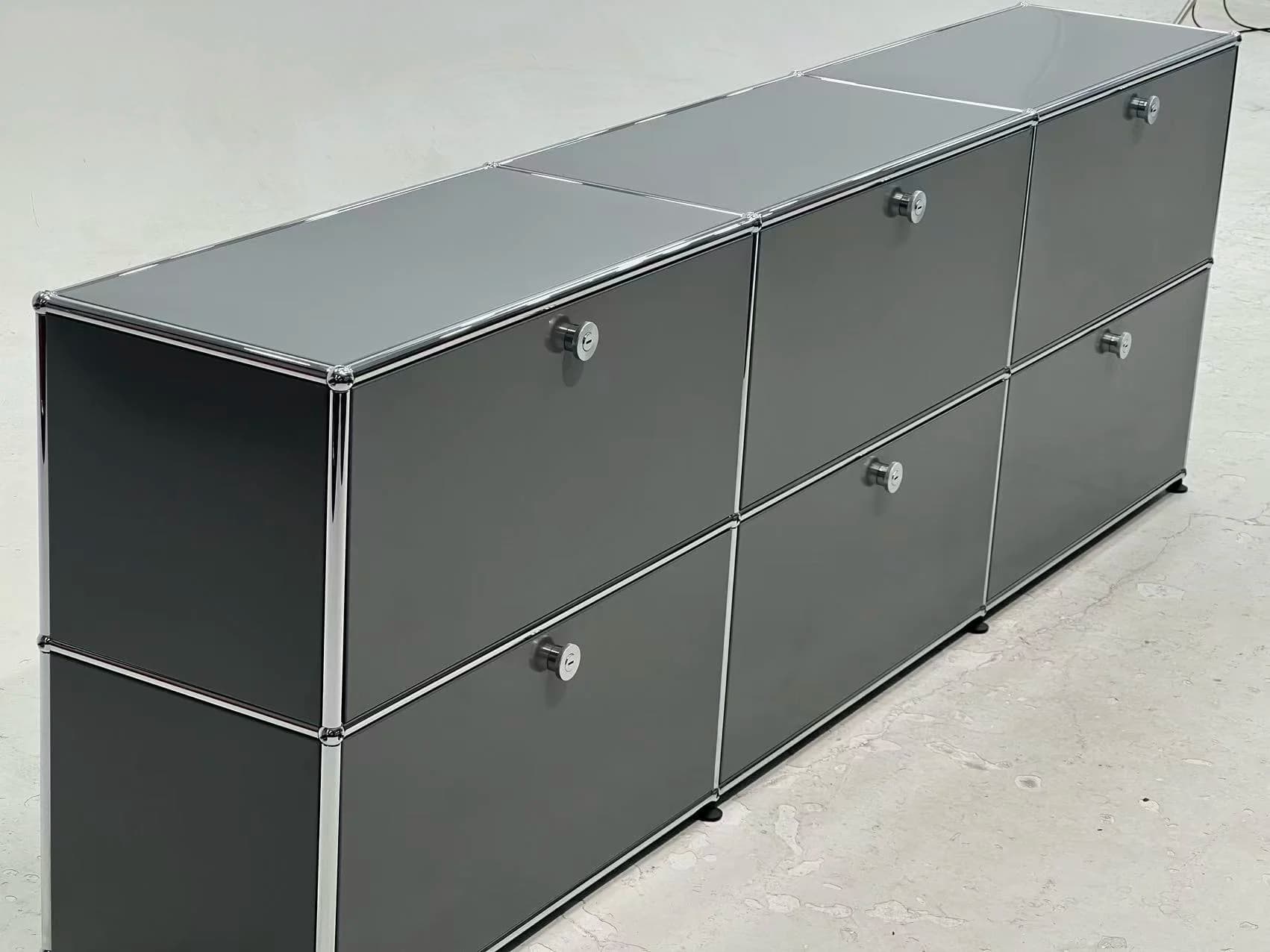
Modular furniture is built from standardised components that connect on a shared grid, so a piece can be resized, reshaped, or moved to another room instead of replaced. The idea is old, but it suits how people live now: smaller homes, more moves, and needs that change faster than furniture wears out. This guide covers what qualifies as modular, the main types, how it differs from flat pack, and where it genuinely does not make sense.

What Makes Furniture Modular?
Modular furniture is made of interchangeable parts sized to a common dimensional grid. Every component fits every compatible component, so the finished piece is an arrangement rather than a fixed object.
Three properties have to be present. Miss any one and the label is marketing.
Standardised components. Parts repeat at set dimensions. This is what makes a shelf bought in year four fit a frame bought in year one.
Reversible connections. The piece can be taken apart without destroying the fixings, and rebuilt with the same rigidity. A system that survives one disassembly is not modular in any useful sense.
Extensibility. You can add to what you own rather than replacing it. If growing means buying a second complete unit and standing it alongside the first, that is stackable furniture, not modular furniture.
What Does Not Count
| Often called modular | Why it is not |
|---|---|
| Stackable cubes and crates | Parts sit on each other rather than joining a shared frame |
| Sectional sofas | Sections rearrange but cannot be resized or extended with new parts |
| Adjustable shelf bookcases | Only the shelf height moves, the carcass is fixed |
| Flat pack sold in matching sizes | Matching is not the same as connecting |
The test that settles it: can you buy one component in isolation and have it fit what you already own? If not, the furniture is coordinated rather than modular.
What Types of Modular Furniture Are There?
| Type | Typical use | How much genuinely changes |
|---|---|---|
| Modular storage and shelving | Living rooms, offices, studios | High. Width, height, open or closed, all reconfigurable |
| Modular seating | Living rooms, waiting areas | Medium. Layout changes, individual seats do not resize |
| Modular office systems | Workstations, reception, filing | High. Designed around changing team sizes |
| Modular kitchen units | Kitchens, utility | Low once installed. Modular at specification, fixed afterwards |
| Modular bedroom furniture | Wardrobes, nightstands, dressers | Medium. Depends on whether the system shares a grid with other rooms |
Storage and shelving is where modular systems deliver the most, because storage needs change more than seating needs do. A living room sofa serves the same purpose in ten years. A shelving unit rarely holds the same things.
How Is Modular Furniture Different from Flat Pack?
The two get confused because both arrive in boxes and both need assembly. They are built on opposite assumptions.
| Flat pack | Modular system | |
|---|---|---|
| Designed for | One assembly | Repeated assembly |
| Typical fixings | Cam locks and dowels into board | Metal connectors into a frame |
| Buying a single part later | Rarely possible | Expected |
| Effect of moving house | Often discarded | Rebuilt to fit |
| Cost per shelf | Lower | Higher |
| Structural material | Particleboard or MDF | Usually steel or aluminium |
Flat pack optimises for the lowest cost of a single purchase. Modular optimises for the lowest cost of a decade. Neither is better in the abstract, and which one wins depends entirely on whether you will change the layout.
For the mechanics of how modular connections carry load, see our guide to modular shelving systems.
Why Has Modular Furniture Become More Popular?
Three shifts, none of them about design taste.
People move more often. Furniture that cannot be rebuilt to fit a new room gets sold or discarded at each move. A system that rebuilds survives.
Homes are smaller and work from home is normal. A room now has to be a study on weekdays and a living room on weekends. Furniture that changes with the room is worth more than furniture that does not.
Replacement cycles are under scrutiny. Buying the same category of item three times in ten years is expensive and wasteful. The interest in modular is partly an interest in not doing that.

Is Modular Furniture More Sustainable?
It can be, and the condition matters more than the claim.
Modular furniture reduces waste only if it is actually kept and reconfigured. A modular unit bought and then replaced after four years is worse than a fixed cabinet kept for fifteen, because it carried a higher manufacturing cost for no extra service life.
What genuinely helps:
Repairability. A damaged shelf is replaced as a part rather than the whole unit becoming waste.
Material recyclability. Steel is recycled at high rates and does not degrade in the process. Particleboard bonded with adhesive is difficult to recycle and usually is not.
Finish availability over time. A system whose colours remain available years later can be extended. One whose finish is discontinued effectively becomes fixed, which removes the entire sustainability argument.
Be sceptical of sustainability claims that rest on the word “modular” alone. The question to ask is whether the manufacturer still sells individual components for a system released five years ago. That answer is verifiable, and the marketing claim is not.
Which Rooms Suit Modular Furniture Best?
Home office. The strongest case. Equipment, storage needs, and even whether the room is an office at all can change within a year. Pairing an A1 Desk Unit with adjacent storage lets the setup grow without a second purchase.
Living room. Media equipment changes on a shorter cycle than furniture. A media unit that adapts outlasts several generations of hardware.
Bedroom. Modular works here when the system shares a grid with the rest of the home, so a nightstand can later become something else in another room. As a standalone bedroom purchase the case is weaker, since bedroom needs change slowly.
Entryway and dining. Small pieces that move between roles, such as a serving cart, get more use from mobility than from reconfiguration.

Where Does Modular Furniture Not Work?
Four honest cases.
Exact fit installations. A grid cannot hit an arbitrary alcove dimension. Built in joinery is the right answer, and usually cheaper than working around the grid.
Lowest possible budget. If cost is the binding constraint and the layout will not change, flat pack does the job for less.
Hidden utility storage. Garages, lofts, and basements do not benefit from the engineering that makes modular systems expensive.
Very soft interiors. Steel frame systems read as minimal or industrial. No configuration option changes the material’s visual character.
What Should You Check Before Buying?
Short version, since this deserves its own treatment:
- Is the load rating per shelf or per unit?
- Is the depth adequate for your deepest item?
- Are individual components sold separately, today, for systems released years ago?
- Is the colour a standard reference that will still exist later?
- Does the grid produce a size that actually fits your space?
The full version, including how to size a system and the mistakes that turn a flexible system into a fixed one, is in our modular storage buyer’s guide.
You can also build a layout and see the component list before ordering with the Arvhi configurator.
Frequently Asked Questions
What is modular furniture in simple terms? Furniture built from standard parts that connect on a shared grid, so it can be resized, reshaped, or extended later instead of replaced.
Is modular furniture the same as flat pack? No. Flat pack is designed to be assembled once. Modular furniture is designed to be assembled, taken apart, and rebuilt repeatedly, usually using metal connectors rather than fixings driven into board.
Is modular furniture worth the extra cost? Only if the layout will change. Over ten years with two or three reconfigurations it usually costs less than repeated replacement. For a fixed need in a fixed space, it does not.
Can modular furniture from different brands be combined? Almost never. Modular is a design approach rather than a shared standard, so grid dimensions and connectors differ between manufacturers. Choosing a system means committing to it for future expansion.
Is modular furniture good for small spaces? Yes, because it can be sized to the space rather than the space accommodating the furniture, and it can be rebuilt when you move rather than discarded.
How long does modular furniture last? The frame usually outlasts the finish. The practical limit is component availability: a system lasts as long as the manufacturer still sells parts for it.